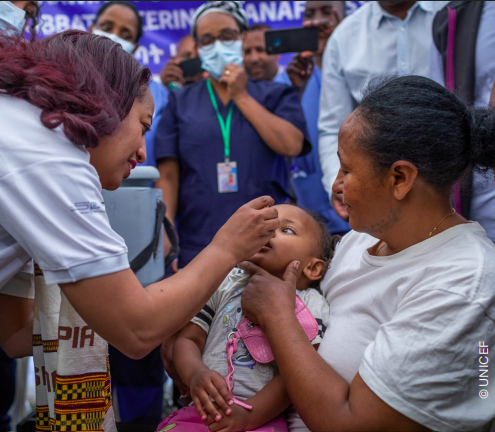
Polio Programming in Ethiopia Reduces Gender Barriers to Immunization Through Built-In Strategies (GPEI, 2026)
This brief shows how core elements of Ethiopia's polio campaign strategy - house-to-house visits, a majority-women vaccination workforce, and persistent follow-up - end up addressing gender-related barriers to immunization almost by design, even when that isn't their primary goal.
Readers will get a clear-eyed look at both what's driving Ethiopia's progress against zero-dose children and where gaps remain, particularly in leadership roles and hard-to-reach pastoralist communities.