Building markets for women, with women
by: Renée Giovarelli
—
Renée Giovarelli is a lawyer and senior gender integration specialist at the Global Center for Gender Equality (GCFGE). Her past work has been focused on women’s rights to agricultural and pastoral land and agricultural services. For the GCfGE, she works with donors to consider gender differences when designing agricultural projects and to develop projects that will benefit men and women.
—
When women pastoralists are faced with the challenge of providing food for their families, too often their coping mechanism is to give away their own food. “Whenever there are shocks such as droughts which in turn lead to food shortages, women skip meals to ensure their families are fed,” says Dr Rupsha Bernerjee, a senior scientist at International Institute of Research on Livestock (ILRI).
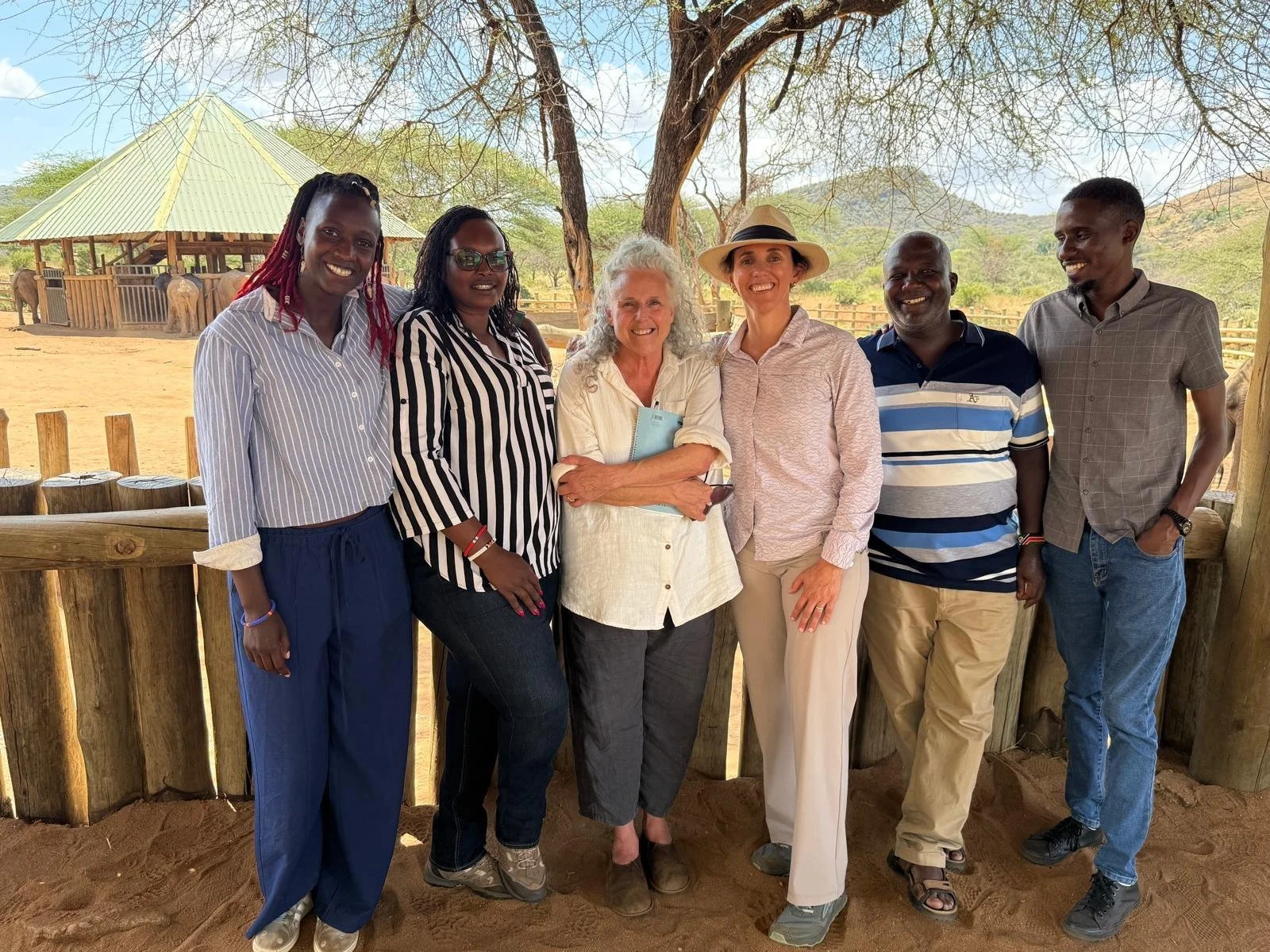
From left to right: Naisula Lepariyo, Florence Nasieku Lesoloyia, Renee Giovarelli, Lynn Schneider, John Ole Tingoi, Lmeriae Lesuuda.
I have spent a good part of my working life thinking about and visiting pastoralists—starting in Central Asia in 1995 and, more recently in Kenya. This year in June, I had the privilege of being hosted by the Indigenous Movement for Peace Advancement and Conflict Transformation (IMPACT), a non-profit organization in Laikipia, Kenya, that is working on a goat milk project funded by the Gates Foundation. The project, “Women’s Economic Empowerment and Resilience in Pastoralist Communities” (WEE-RESP), is a community-led, gender-transformative, and climate-adaptive program to strengthen women’s economic empowerment, resilience, and household nutrition in pastoralist communities across Samburu, Laikipia, Marsabit, and Isiolo counties in Northern Kenya. The project will work with a women-owned cooperative to revitalize the goat milk value chain by establishing aggregation systems, enabling value addition, and linking products to formal markets. The Global Center for Gender Equality (GCfGE) is helping to support this project because of our expertise in women's economic empowerment and our understanding of the specific concerns that women pastoralists face. Our role is to help translate WEE-RESP's ambitions into practical strategies and measurable results. WEE-RESP will work with and support all community members, men, women and youth.
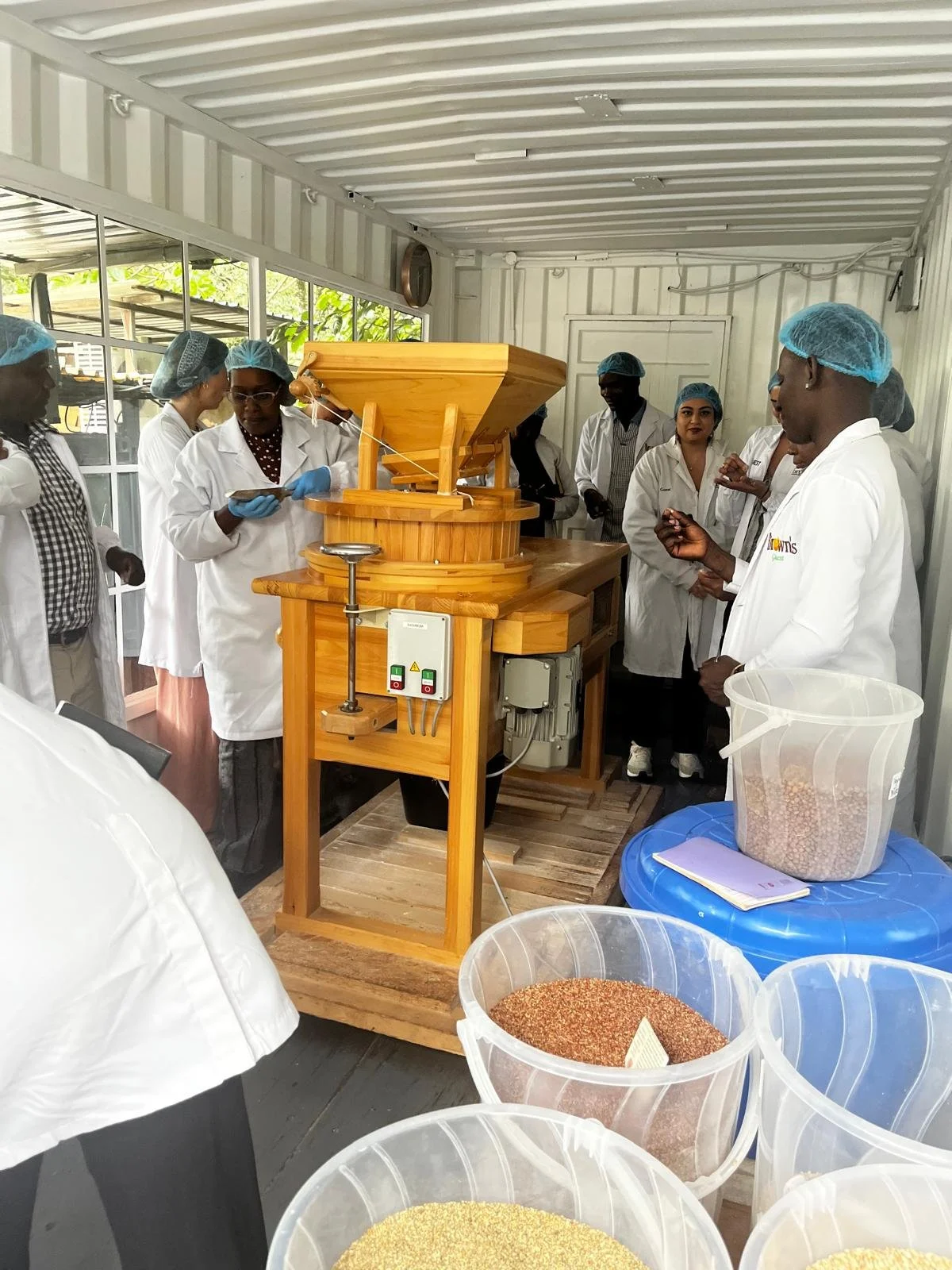
Visit to a goat milk cooperative, as a part of a project to develop a cooperative with pastoralist women.
Pastoralist communities globally are experiencing chronic poverty, food scarcity, and climate shocks, particularly droughts. Women in these Northern Kenyan communities face entrenched barriers: restricted land rights, exclusion from financial systems, limited market access, and social norms that marginalize their decision-making. Investments in large livestock and formal markets often exclude women from meaningful benefits—not intentionally, but because women are generally not the public face of the family, or of the community, or the value chain. Men are. As well, men more commonly manage large livestock like cattle and camels, while women focus on smaller livestock, such as sheep and goats.
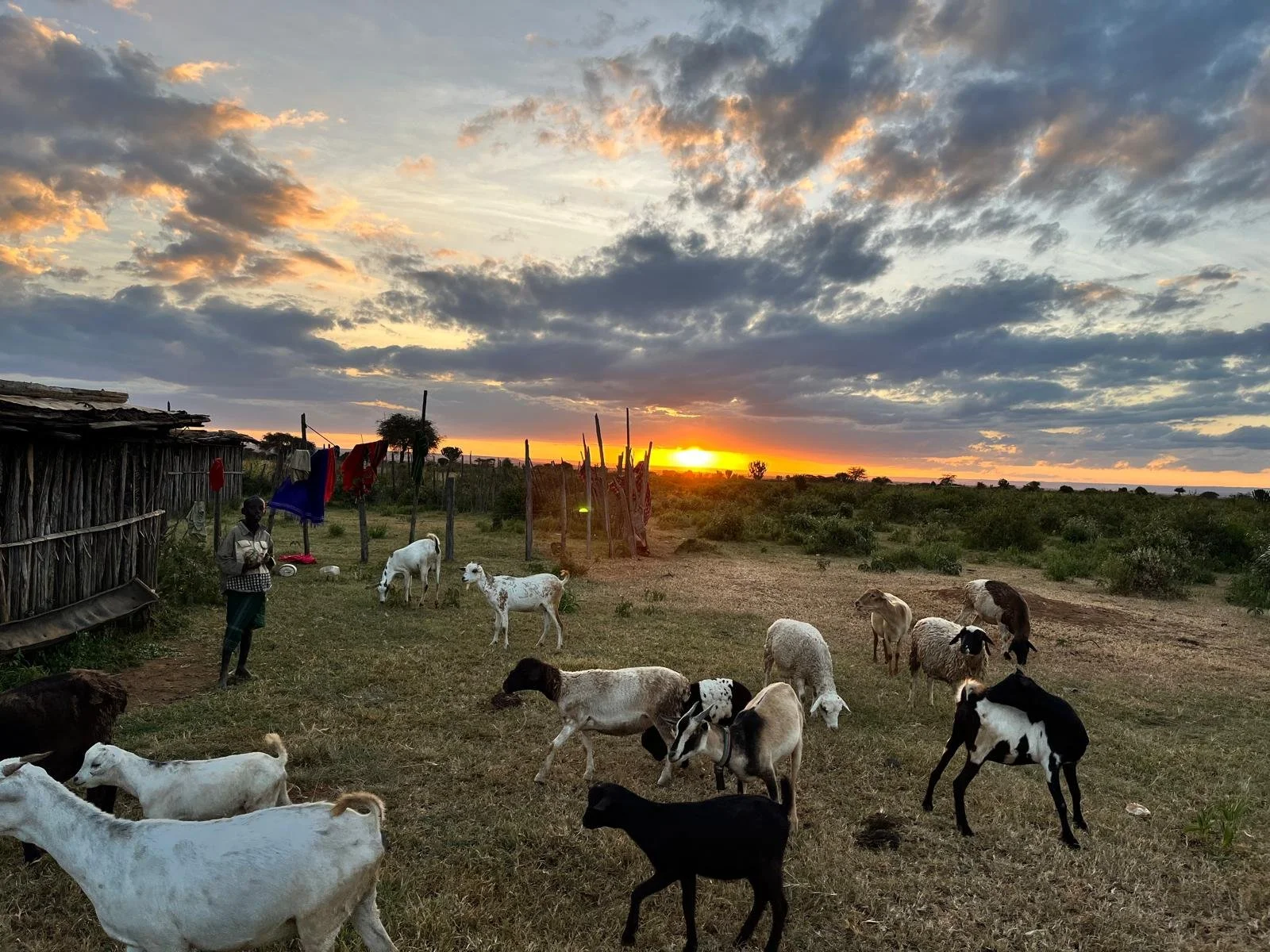
Sunset in the pastoralist community
The women I met carry deep, practical expertise: they know their animals, their land, and their markets intimately. They walk long distances, care for children and animals, build and then take down and move their houses, and buy and sell sheep and goats. These are skills built over a lifetime, based on knowledge passed down through generations. Little of that expertise is reflected in the money they earn or the say they have in decisions that affect their households. To truly transform women's lives, donor projects have to be centered on women: on the cultures they are part of, and the gendered opportunities and restrictions they encounter as members of their communities.
The WEE-RESP project started with asking pastoral women about their achievements and difficulties now, and what they believe will help them increase their income and agency within the household. The team is now researching how best to meet women where they are and walk with them to where they want to go. For increased income and responsibility to be sustainable for women, a critical goal for the Gates Foundation, the women’s cooperative must be part of the food production economy and participate in the goat milk value chain.
The land in northern Kenya is shared by people, their animals, and wild animals. This is not always an easy combination. The indigenous people who live and raise their families on that land know how to care for it, and for each other.
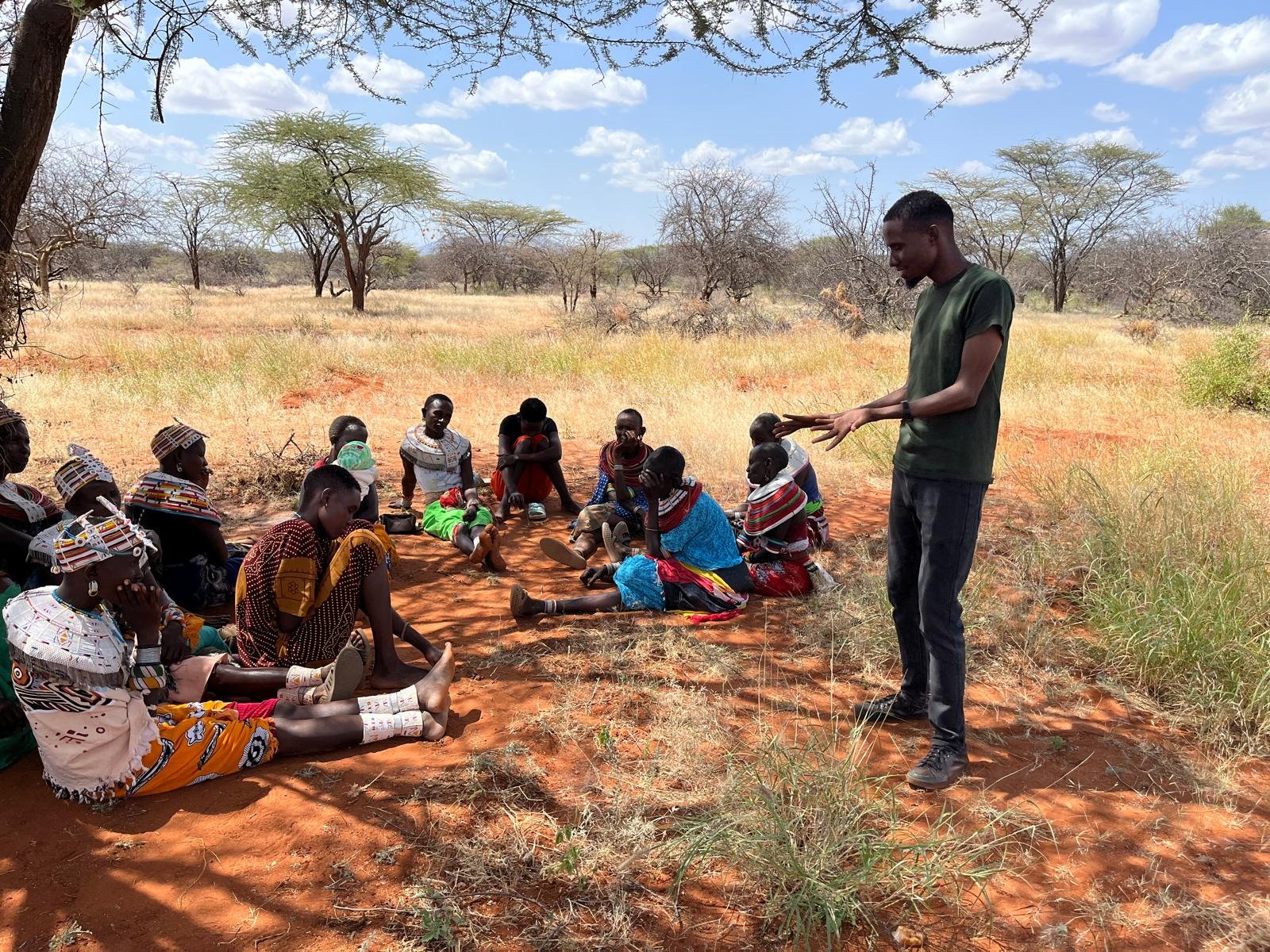
Community meeting to discuss the project
The United Nations designated this year as the International Year of Rangelands and Pastoralists. Rangelands cover around half of the Earth’s land surface, are home to roughly a billion animals, and support the livelihoods of more than a billion people. This designation is an acknowledgement of the importance of pastoralists and the need for projects like WEE-RESP, which allows pastoral women to define the terms of their economic participation. Thirty years after I first began visiting pastoralist communities, the lesson has not changed: pastoralist women have always understood what they need. What has been missing are systems that are built around women’s knowledge and needs. That is what WEE-RESP is attempting, and it is why the effort matters. Check out more of our work on gender integration and women’s economic empowerment at www.gcfge.org.