
Bringing Gender and Youth Together: A Practical Framework for Institutional Change
by: Alex Munive
For most of my professional life, I have worked with organizations trying to move gender equality and youth from the margins to the mainstream.
That journey has taught me one lesson again and again: it is one thing to commit to gender equality or youth empowerment in principle, and quite another to embed it into the DNA of an institution. It is easy for institutions and leaders to adopt the language of change and transformation. It is much harder for them to change how power, priorities, and accountability actually work.
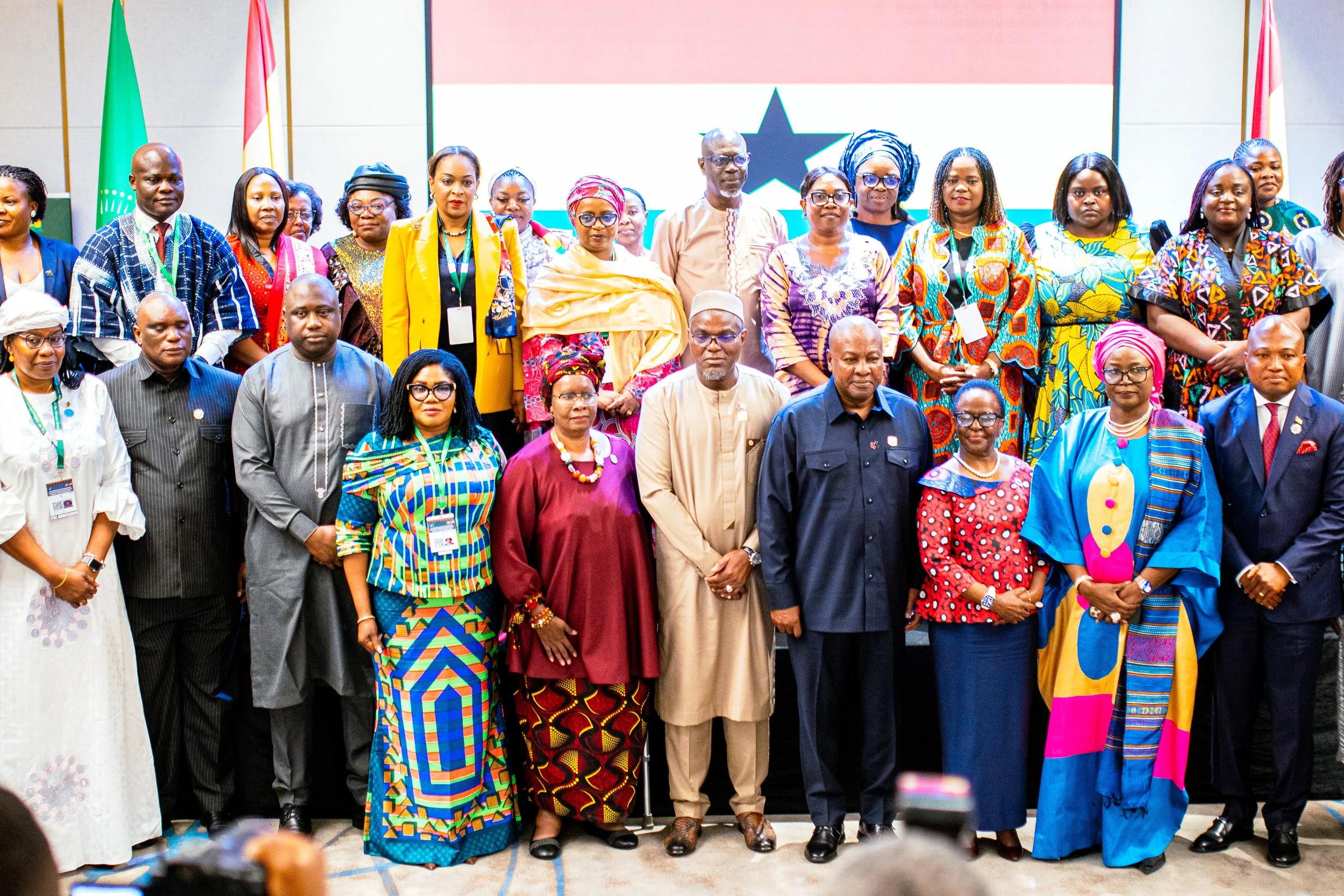
Leaders from the African Union met in February to discuss inclusion an d empowerment. | Photo credit: ART
One of the most difficult challenges I have encountered is bringing together two agendas that are both essential but often treated separately: gender and youth. In many organisations, these sit in different strategies, different technical teams, different conversations, and sometimes even different decision making and political spaces. And the result is something many of us have seen before: these agendas end up moving on separate tracks, even when everyone agrees they should be connected.
I saw this clearly in earlier work as the Director of Gender and Inclusion at Plan International. When we brought a stronger inclusion and age lens into gender work, it did not weaken the agenda, as gender compounds all forms of exclusion. The organization’s work became stronger. The situational analysis became sharper. The programs became more relevant. It became easier to see that age and gender are not competing lenses. Together, they help us better understand how power is distributed, who participates and who is excluded, and how change can happen.
That experience stayed with me.
So in the last year, it has been especially meaningful to collaborate with the African Union’s Women, Gender and Youth Directorate and our partner, Africa Renaissance Trust, to help shape a practical framework that brings the youth and gender agendas together in a way that leaders and teams can actually use. The recent launch of the framework by Directorate and marked by the presence of the President of Ghana, John Dramani Mahama, also sent an important message. This is not a side agenda. It is part of the leadership and institutional change needed to make mainstreaming real.
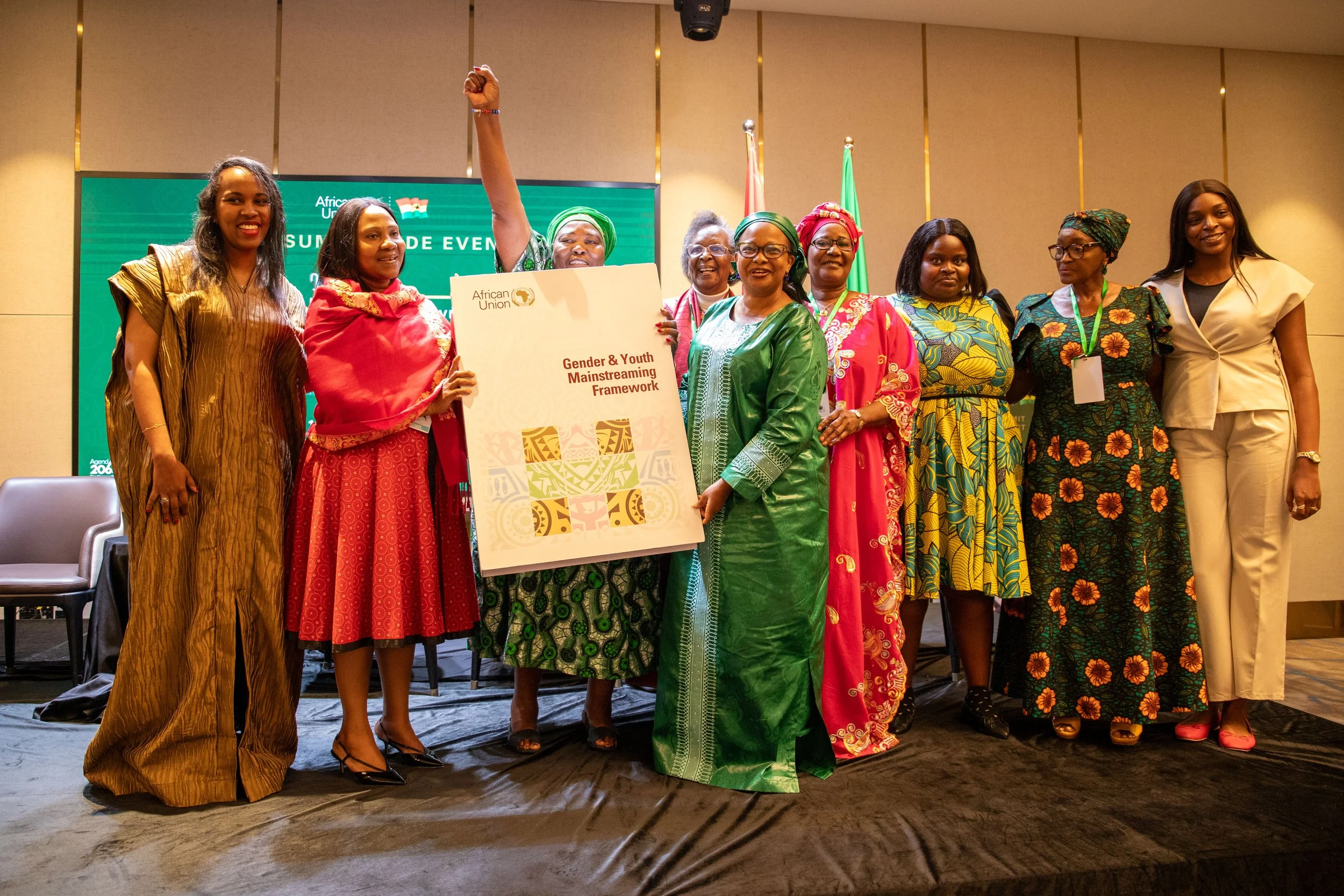
Leaders from the African Union adopt a Gender & Youth Mainstreaming Framework, in partnership with the Global Center for Gender Equality and African Renaissance Trust. | Photo credit: ART
And that is precisely why the framework begins with something that may sound obvious but is often missing: a common definition and shared understanding. In my experience, institutions often use the language of mainstreaming, inclusion, gender, participation, and empowerment as though everyone means the same thing. They usually do not. Without a shared definition, teams move in different directions. Without a shared understanding, accountability becomes performative. Common language is key. It is the starting point for coherent action.
A second strength of the framework is that it is structured around the three Ps: people, programmes, and policies. That matters because it makes mainstreaming real. On people, the question is whether leadership, staffing, capacity, and institutional culture make gender equality and youth inclusion possible. On programmes, the question is whether design, implementation, budgeting, and monitoring processes actually lead to more equitable outcomes. On policies, the question is whether gender and youth are integrated not only into policy content, but into how policy is shaped, reviewed, and decided.
The framework is practical by design. It helps move the conversation away from abstract commitment and toward institutional reality. Moreover, it takes an incremental approach to change, meeting teams and organizations where they are.
We also supported the development of a gender and youth marker to support accountability. This is critical. Too often, mainstreaming remains rhetorical. Everyone agrees it is important, but few systems make progress visible or create the right incentives for change. A marker creates a way for leaders and teams to assess where they are, identify gaps, and begin to track change. That does not solve everything, but it shifts the dialogue towards accountability.
And this is where leadership plays such a critical role. Gender and youth mainstreaming gains traction when leaders help turn shared commitment into practical action. Leaders are essential in signaling priorities, setting the tone, creating incentives, and ensuring these agendas are recognised as central to the institution’s work rather than as add-ons. Gender and youth cannot remain parallel agendas. They must become part of the same institutional logic, as the African Union has done.
That is why this work matters so much to me. It connects with years of work I have done with organisations seeking to drive change faster, more deeply, and more institutionally. It also connects to the urgency reflected in spaces like the framework’s launch event where high-level leadership and political commitment were rightly placed at the centre of the conversation.
This framework is only a first step. But it is an important one. Because practical tools matter. Shared definitions matter. Accountability matters. And leadership matters most of all.